
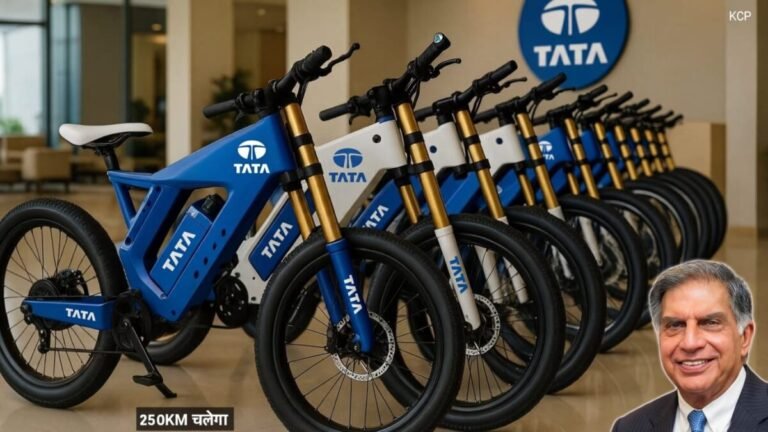
Headlines like this spread fast because they sound unbelievable—and that’s exactly why they need to be read carefully. The idea of India’s cheapest electric cycle priced at just ₹4,499 with a claimed 250 km range has created massive curiosity among buyers, students, and daily commuters. With fuel prices staying high and electric mobility gaining momentum, such a product would truly be revolutionary if it were real in the way the headline suggests.
However, when we slow down and look at the details logically, it becomes clear that this claim needs context and clarity. Let’s break down what is actually being discussed, where the confusion comes from, and what buyers should realistically expect from the electric cycle market in India—especially when a trusted name like TATA is mentioned.
Why This News Has Gone Viral So Quickly
Electric cycles are becoming popular because they are affordable to run, eco-friendly, and easy to maintain. Many people are actively searching for a low-cost alternative to petrol scooters, especially for short-distance travel. When a headline promises a ₹4,499 price tag and a 250 km range, it instantly grabs attention because it sounds like a once-in-a-lifetime deal.
The trust factor also plays a big role here. TATA is a well-known and respected Indian brand associated with quality, safety, and innovation. So when its name is linked with such an aggressive price and specification, people naturally assume it must be official and verified.
Is There Really a TATA Electric Cycle at ₹4,499?
As of now, there is no official confirmation from Tata Group or Tata Motors about launching an electric cycle priced at ₹4,499 with a 250 km range. No press release, product listing, or announcement on official Tata platforms supports this exact claim.
In many cases, such headlines are based on:
- Partial information taken out of context
- Prototype concepts or startup collaborations
- Government subsidy assumptions added to base prices
- Or completely unrelated products wrongly linked to TATA
This does not mean Tata has no interest in electric mobility at the micro level—it simply means that buyers should not assume such specifications are officially launched or available for purchase at this price.
Understanding the Reality of Electric Cycle Pricing
To understand why this claim raises red flags, it helps to look at how electric cycles are built. A basic electric cycle includes a battery, motor, controller, wiring, frame reinforcement, and safety components. Even with mass production, the battery alone costs more than ₹4,499 at current market rates.
Most entry-level electric cycles in India today are priced between ₹25,000 and ₹45,000, depending on battery capacity and brand. These cycles usually offer a real-world range of 25 to 60 km per charge, which is suitable for daily commuting.
A 250 km range would require a much larger battery, pushing the cost significantly higher.
Where the 250KM Range Claim Comes From
The 250 km figure often appears due to misinterpretation or exaggeration. In some cases:
- It refers to cumulative distance over multiple charges
- It is a theoretical calculation under ideal conditions
- Or it includes pedaling assistance combined with battery usage
In real-world conditions—considering rider weight, road quality, speed, and terrain—such high range figures are not practical for an electric cycle, especially in the ultra-budget segment.
Tata’s Actual Role in Electric Mobility
Tata Group is heavily invested in electric mobility, particularly through Tata Motors, Tata Power, and Tata AutoComp. Their focus has been on electric cars, charging infrastructure, batteries, and large-scale mobility solutions.
While Tata may collaborate with startups or support innovation in micro-mobility, any official consumer product launch would be clearly announced through verified channels. Until that happens, buyers should treat sensational claims with caution.
Why Ultra-Low Prices Can Be Risky for Buyers
Offers that sound too good to be true often come with hidden risks. Extremely cheap electric mobility products may suffer from:
- Poor battery quality
- Safety issues
- Lack of warranty or after-sales support
- No spare parts availability
In some cases, buyers end up paying more later due to frequent repairs or battery replacement. This defeats the purpose of choosing an affordable electric option in the first place.
What Buyers Should Look for Instead
Rather than chasing viral headlines, buyers should focus on practical value. A good electric cycle should offer:
- Reliable battery with warranty
- Honest range claims (30–60 km)
- Strong frame and braking system
- Service support in nearby locations
Spending slightly more upfront often results in lower long-term costs and a safer riding experience.
Could Tata Launch an Affordable Electric Cycle in the Future?
It is entirely possible that Tata or a Tata-backed startup could explore the electric cycle segment in the future. If that happens, the product is likely to focus on durability, safety, and realistic performance, rather than extreme specifications at impossible prices.
Such a launch would be widely covered by mainstream media and officially announced—not quietly released through viral social media posts.
Final Verdict
The claim of India’s cheapest electric cycle at ₹4,499 with a 250 km range under the Tata name is not supported by official information at this time. While the idea is exciting, buyers should approach such headlines with critical thinking and rely only on verified sources before making any purchase decision.